Day Three Recap: Nevada Women’s Film Festival 2026
Saturday Brings the Festival’s Biggest Panel Day and a Retro Night Out
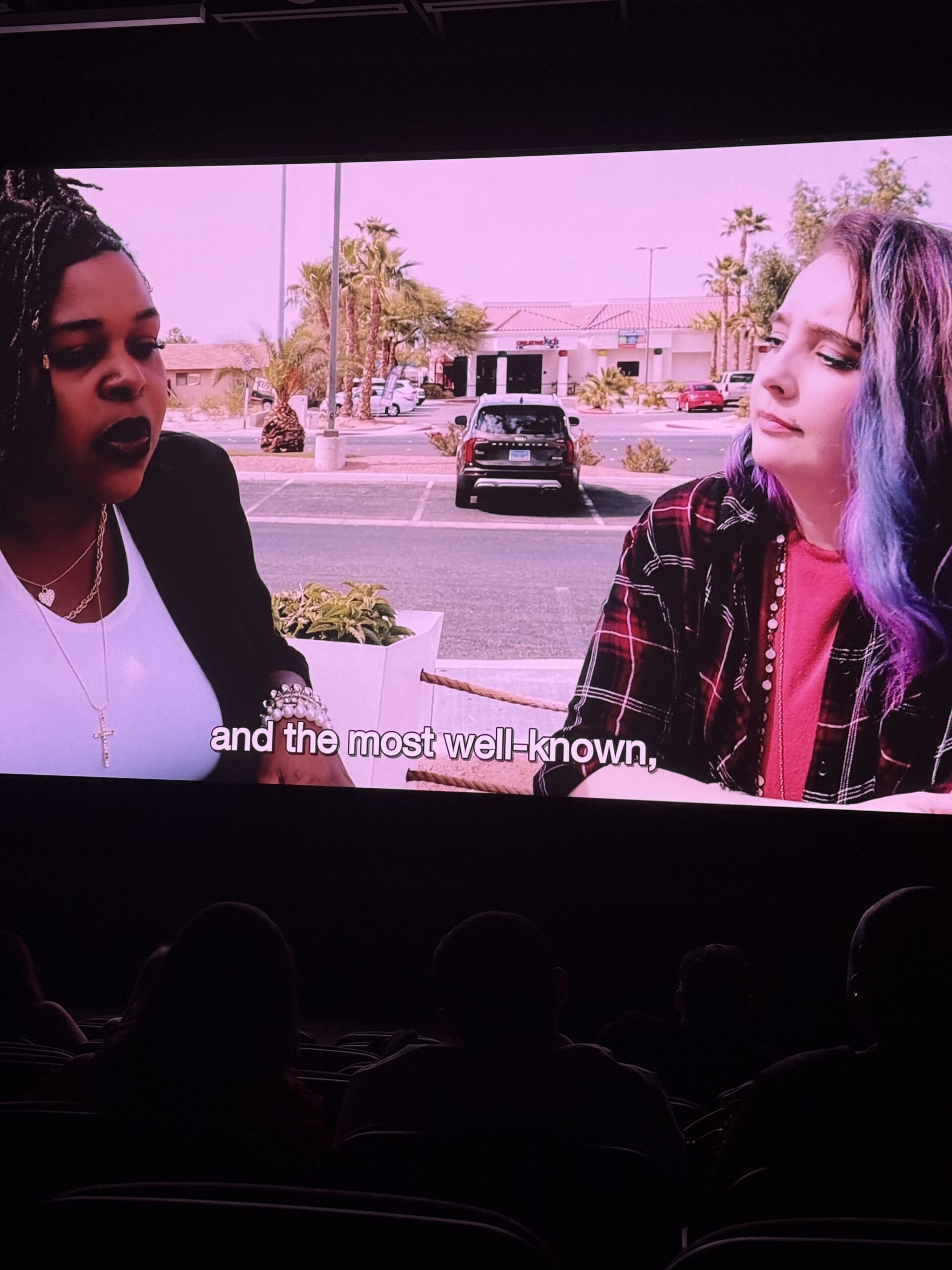
Lolly Dager Eats Sponge Cake
By Saturday, the film festival has found its rhythm. The novelty of opening night has settled into something deeper, a sense of shared experience, of having watched a lot of films with a lot of strangers who are starting to feel less like strangers. Day Three of NWFFest 2026 leaned into that energy hard, delivering the festival’s most panel-heavy day, a screening slate that ranged from documentary to thriller, and a night out no one will be forgetting anytime soon.
The Morning: AI, Creativity, and the Hard Questions
Saturday’s first major event arrived at 10 a.m. in FDH Screening Room 105: The Perils & Possibilities of Generative AI, one of the most anticipated conversations of the entire weekend. The discussion was facilitated by UNLV artistic scholar and Eat More Art Vegas founder Sarah O’Connell, who researches AI’s impact on the creative economy, alongside NWFFest Programming Coordinator Jennifer Dean, whose career spans post-production work both before and after the AI era. Rounding out the panel was UNLV Samuel S. Lionel Professor of Intellectual Property Law Marketa Trimble, whose expertise in international IP law added a legal dimension that the room clearly appreciated.
The hour-long conversation was designed to require human engagement, and it delivered. With AI dominating every corner of industry conversation right now, having three experts with genuinely different angles on the same problem made for a discussion that didn’t wrap up neatly. That was the point. Filmmakers are left with more to think about, not less.
The Films: Lesbians in Boystown and Lolly Dagger
Saturday’s screening slate brought two of the most distinctive films of the entire festival. At 11 a.m., Betsy Kalin’s documentary Lesbians in Boystown examined the disappearance of lesbian bars, cafes, and bookstores from West Hollywood, once America’s first recognized gay city, and the impact of that loss on the lesbian and queer women who built their community there. It’s a film about erasure told with specificity and care, and it resonated deeply in the room.
Then at 6:40 p.m. came Lolly Dagger Eats Sponge Cake, a Nevada-made film that may have been the most unpredictably entertaining entry of the weekend. Lolly Dagger is writing a play, trying to decode a mysterious piece of graffiti bearing her name, and — oh — dealing with a stalker. Director Aaron W. Brown delivers a genre-bending ride that keeps you genuinely unsure where it’s going next, which is a rare and wonderful quality in any film. The audience was with it completely.
Afternoon: The Vertical Vision
At 3 p.m., the festival turned its attention to one of filmmaking’s fastest-growing formats. The Vertical Vision panel, presented in collaboration with the Future of Film Association and OPTIX, brought together a group of vertical creators and distributors to explore how the phone-first frame is reshaping storytelling.
Moderators Ashley Rapuano Sanchez and Keely Dervin led the conversation with Chris Reis, founder of the Future of Film Association and the visionary behind the Optix Vertical Vision Micro Filmmaking Challenge; award-winning Las Vegas-based director Deborah Richards, whose short Scissor Mouth screened as part of the program; intimacy coordinator and director Esther Gabriel, whose credits span HBO’s Hacks to vertical platform Reelshort; Lluvia Giacoman, Grand Prize winner of the Las Vegas Vertical Film Challenge for her film Erasure; and visual storyteller Roberto Lee Cortes of Lenzatic.
The panel was paired with a screening of winning films from the inaugural Vertical Vision Micro Filmmaking Challenge, including Erasure, When Angels Fall, Scissor Mouth, The Kill, Nice Bag, Greatness, The Hunters End, Americana, Happy Accident, The Witch, Cock Fight, and Cracked. Watching twelve short films designed for a vertical frame on a full cinema screen made for an unexpectedly striking viewing experience proof that the format has real cinematic ambition behind it.
Party in Pink: The 12th Annual Filmmaker Mixer
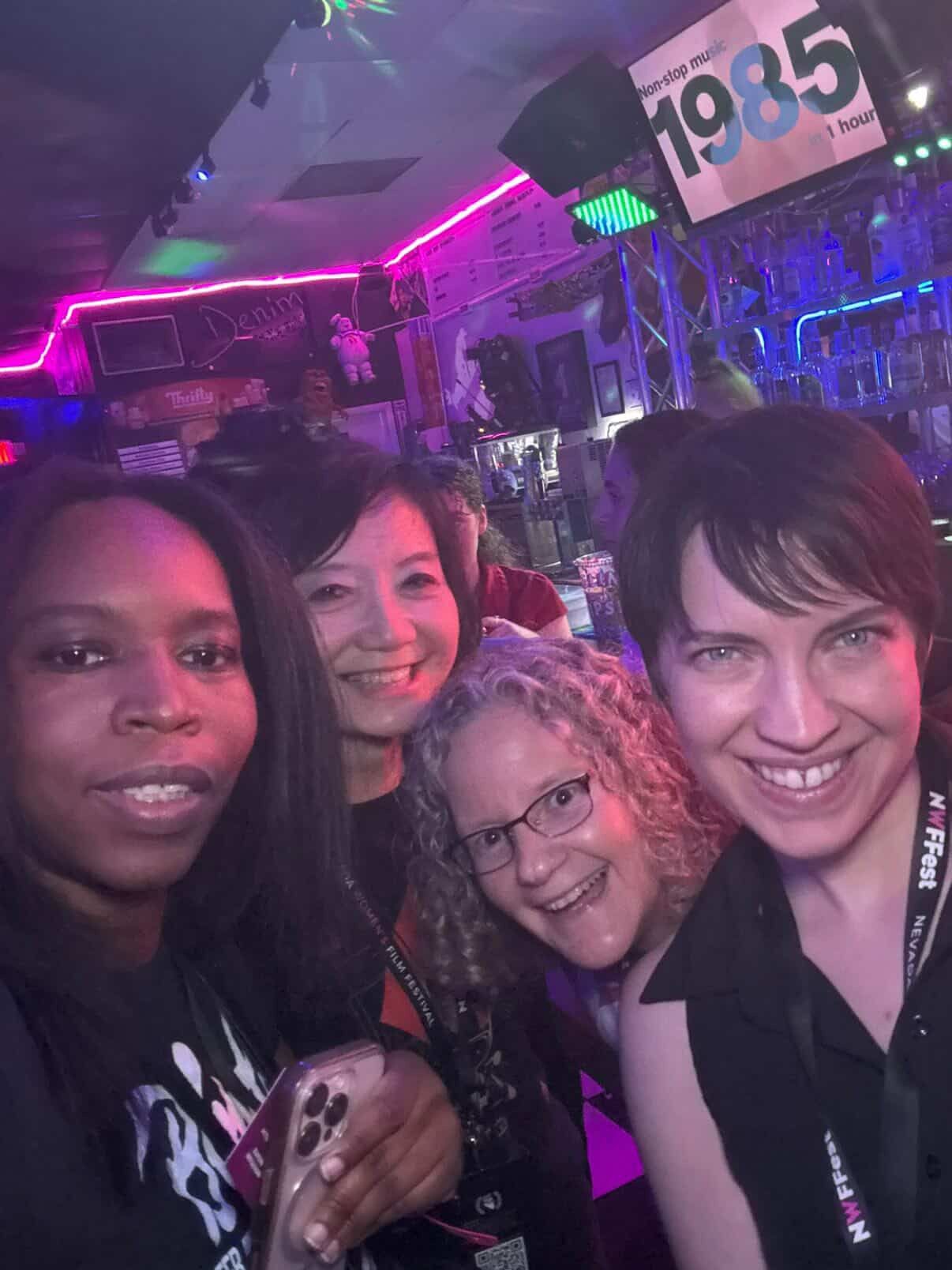
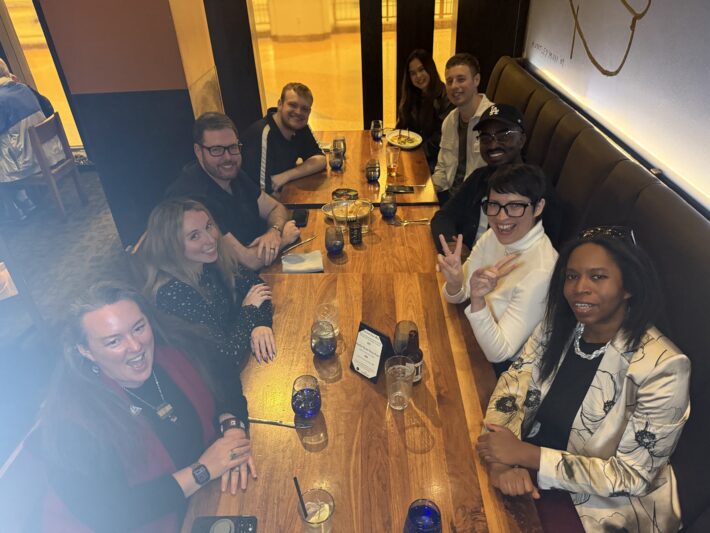
Lauren Jones, Co-founder of Alter New Media, Chris Chew, and her spouse, Betsy Kalin, filmmakers (East LA Interchange and Lesbians in Boystown), with Nadya Rousseau, Founder and CEO of Alter New Media
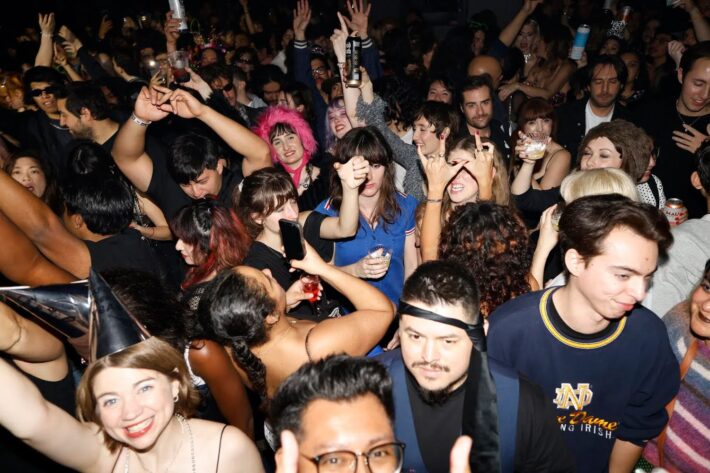
When the last screening of the night wrapped, the festival traded the UNLV campus for something decidedly more retro. The 12th Annual Filmmaker Mixer was a Party in Pink-themed event this year, which took place at Back to the 80’s Cafe & More Las Vegas on Maryland Parkway, starting at 8:45 p.m.
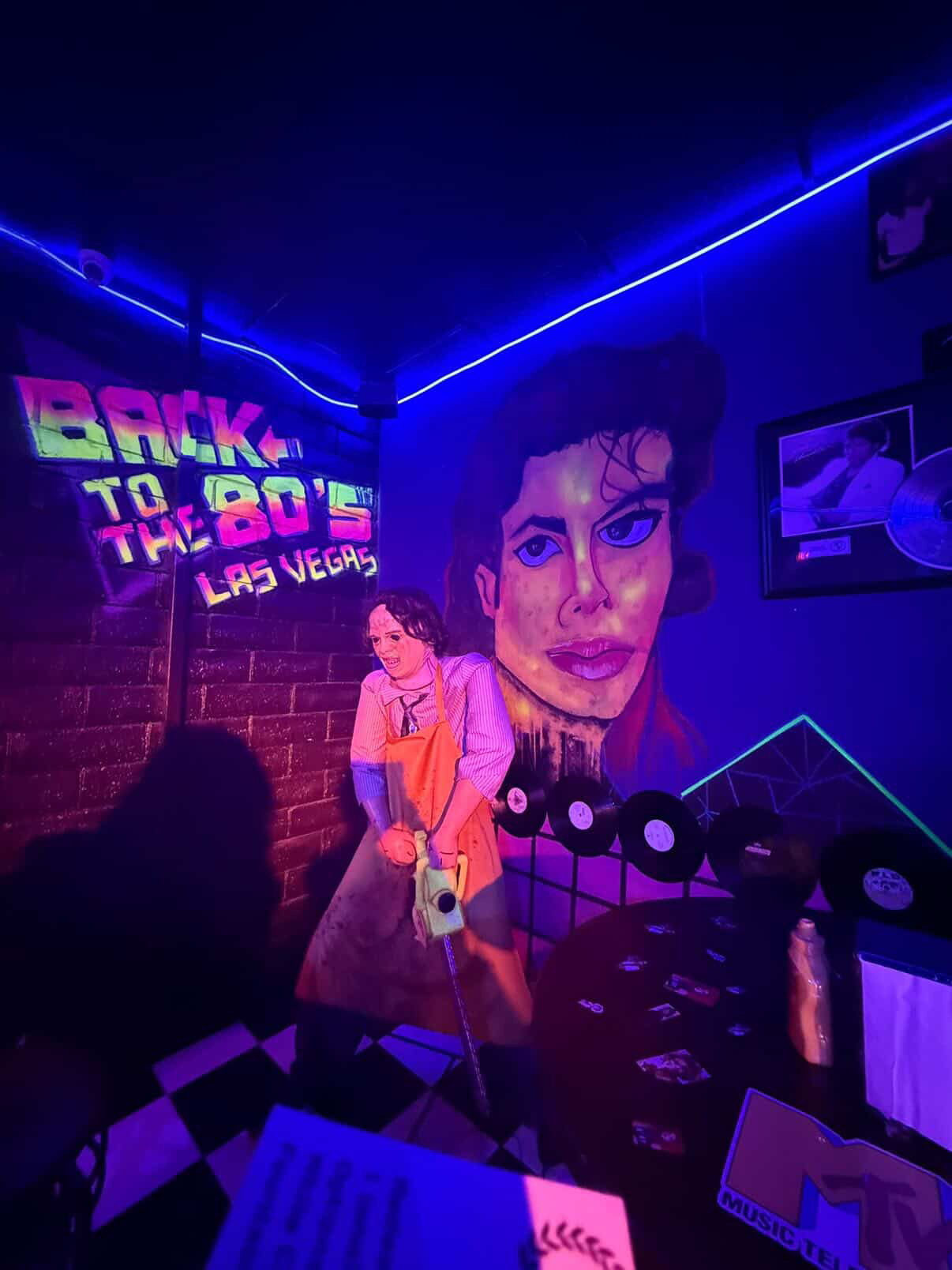
The venue, tucked just minutes from campus, delivered exactly what it promised: synth-era nostalgia, classic bites, and retro amusements straight out of a VHS era. It was an RSVP-only event due to limited capacity, which gave the evening an intimacy that the larger festival spaces can’t quite replicate. Filmmakers from across 15 countries, crammed into a room full of 80s memorabilia, swapping cards and plans over food and refreshments, there’s something uniquely NWFFest about that image.
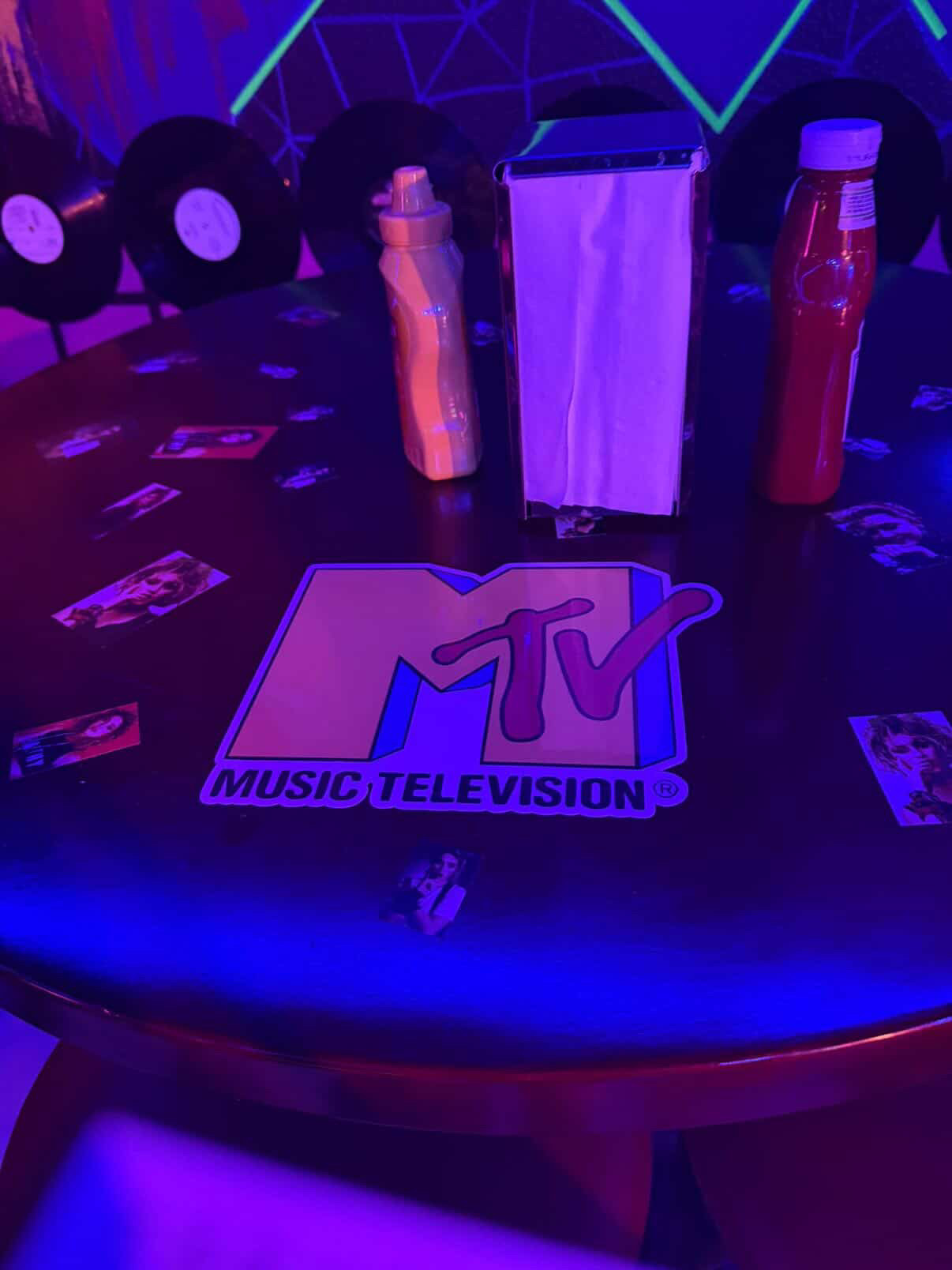
Back to the 80s Cafe: I want my MTV
What’s Ahead
Sunday is the final day, and it carries some of the weekend’s most meaningful moments. The Building a Filmmaking Community panel with the Eccentric Artists team kicks things off at 10 a.m., followed by the presentation of the 2026 Nevada Woman of Achievement Award to Emily Skyle-Golden at 6 p.m. The Femmy Awards ceremony and reception close out the 12th annual festival. Whatever Sunday brings, this festival has already made its mark.